Art, Craft, Skill and Deskill
Introduction
Ever since Marcel Duchamp introduced the concept of readymades as art in the 1920s, the concept of art has changed radically. Various artists began to experiment with deskilling and reskilling, process and produce unskillful work. Being skillful in a traditional artistic field is no longer the only option for artistic practice; it is now one of the many ways artists could approach their work.
I will look at the changing context of craft in contemporary art from Duchamp’s influence on modern craft after the Readymade; the argument of John Robert’s deskilling and reskilling and how that has affected the role of craft in contemporary art, the shift from material to immaterial labour as an artistic skill. Lastly, I will look into the return of craft in contemporary art and how craft fits into contemporary art now with artists who work with amateurism and feminism.
Duchamp and His Influence in Contemporary Art and Craft
After Duchamp’s ‘Fountain’, everyday objects can now be seen as art objects. The world in the 20th century experienced a major change, both politically and socially. Further advancements in technology and science introducedmechanization in factories, the use or introduction of automatic equipment in a manufacturing or other process or facility, replacing its human workers with robotic counterparts. The 19th century Industrial Revolution brought the world large-scale factories of manufacturing and mass production. An artist called Marcel Duchamp promptly reacted to this social change and would go on to alternate art history with his most famous work and challenge the fundamental nature of art, by placing an inverted urinal signed and placed on a gallery plinth.
Marcel Duchamp was a pioneer of his time; he questioned long-held assumptions about what art should be, and how it should be made. In his early years he was recognized and made a name for himself as a painter, but he soon gave up his career as he thinks art should be something more than aesthetics pleasing to the eye. He soon went on to explore the notion of the artist-as-maker against the artist-as-chooser. “An ordinary object could be elevated to the dignity of a work of art by the mere choice of an artist.”
A hat rack and a coatrack to hang things on, a comb to straighten one’s hair, a cover to protect a typewriter from dust, a urinal for peeing in, a rack to dry bottles, a shovel to remove snow. These are Helen Molesworth’s description of Duchamp’s Readymades in his studio. Almost all of Duchamp’s readymades could be found in an average household, they are mundane manmade objects, tools we invented to assist us, objects we barely notice since they are so ingrained in our lives. Before Duchamp, these objects would have no connection with art. Quoting from the avant-garde magazine ‘The Blind Man’, which was run by Duchamp and his two friends, they wrote in regarding Fountain: “Whether Mr Mutt with his own hands made the fountain or not has no importance. He chose it. He took an ordinary article of life, and placed it so that its useful significance disappeared under the new title and point of view – created a new thought for that object.” As Helen Molesworth said, his readymades had done more than re-organise aesthetic categories than any other twentieth-century art.
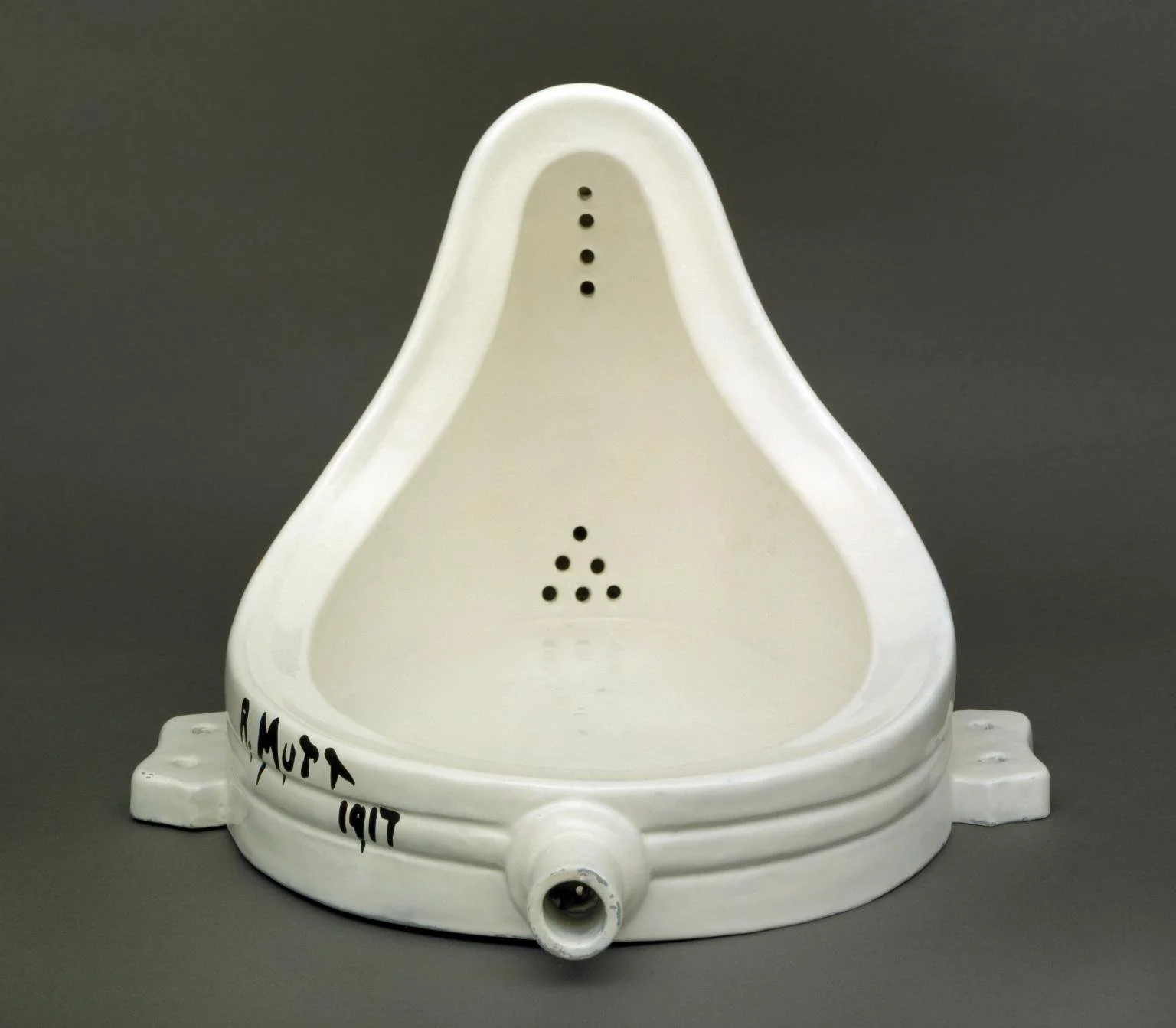
Fig. 1 - Marcel Duchamp, Fountain, 1917, replica 1964
As John Roberts suggests in The Intangibilities of Form, after the readymade, the function of the hand of the artist after is to place, order and select. Uponthe act of the artist selecting, combining, arranging and transforming these readymade objects, these objects become artistic with the artist’s vision. The object became unique because the artist consciously made an artistic decision. Choosing has become a creative act. The skill and labour of an artist is no longer only confined to the expressive demands of covering a given surface or modelling a given material but in the choice of the medium and the objects they choose to work with.
Art has then become a set of ideas, shifting the ground from the dexterity of hands to a mental playground, from physical labour to mental labour. Art has become increasingly conceptual. While some artists still strive to master a set of skills in the artist field (painting or sculpting etc.), artists now are freed from the intense training to attain a certain set of skills to produce aesthetically skilled works, relinquished traditional artistic skills and the production of discrete art objects. Paintings no longer have to be masterfully painted. Sculptures no longer have to be masterfully sculpted. Art objects no longer have to look a certain way or presented in a certain form to be considered as art. A sudden boom of artistic freedom came. The range of aesthetic possibility and what can be considered as art has expanded infinitely. Art can now be everyday, ordinary objects, chosen, transformed and presented by the artist to the viewer. Artistic skill has expanded into the intellectual demands of re-contextualising existing objects in order to change their value. This is the foundation of contemporary art laid by Duchamp a hundred years ago, showing that art is recognized in its context and not from the traditional skill that is put in the process of making art. Deskilling in art is grounded in the expansion of artistic skills into intellectual and immaterial labour (Roberts, 2007)
As Molesworth shows in her essay Work Avoidance, Duchamp once said, “Deep down I am enormously lazy. I like living, breathing better than working.” The roles of the artist have also massively expanded alongside with this evolution of aesthetics. Artists can now act as the curator of ideas, their work is to arrange ideas into an aesthetic ensemble. The viewer takes in the arrangement with their bodily senses (vision, sound, smell etc.) and have their own take and interpretation on the work based on what they see and experience from the information arranged and presented by the artist. Some artists challenge authorship and value of work by giving up the labour of making his own work and transferring this right to the workers, they took a supervising role in his own work and yet the produced art object is still in their name. As John Roberts have said in The Intangilibities of Form, this would have been impossible before increasing alienation of the artist, and without the new social and technological conditions of advanced capitalist competition. This new capitalist social conditions allowed and challenged artists to think themselves as modern outside of the prevailing and long-standing academic institutional arrangements where art-making used to take place for a long time.
While some artists choose to be curators of their own working, and sourcing artistic labour to factory workers and skilled artisans, some has chose to literally became the workers instead. Industrialization in America has led artists to take inspiration and take the role as the labourer, examples such as Andy Warhol who mass produced screen-prints in his studio, the Factory, giving the artist a more blue-collared, working class image. Making art no longer has the bourgeoisie-image of the artist working in a quaint, well-equipped studio full of a set of working tools but as a humble worker in working clothes, laboriously making their work, treating art hard labour and the artist process as ‘getting the job done’.
In Helen Molesworth’s Work Ethic, Robert Morris’s Box with the Sound of Its Own Making is an emblematic piece of artwork. It stands as a key example that illustrates the changing definition of artist labour after the 1960s, as artists start to explore the problem of traditional production versus a new mode of production with machines, as the American economy is experiencing a major shift from a manufacturing based economy to a service based economy. The art produced in this period reflects the social and cultural change.
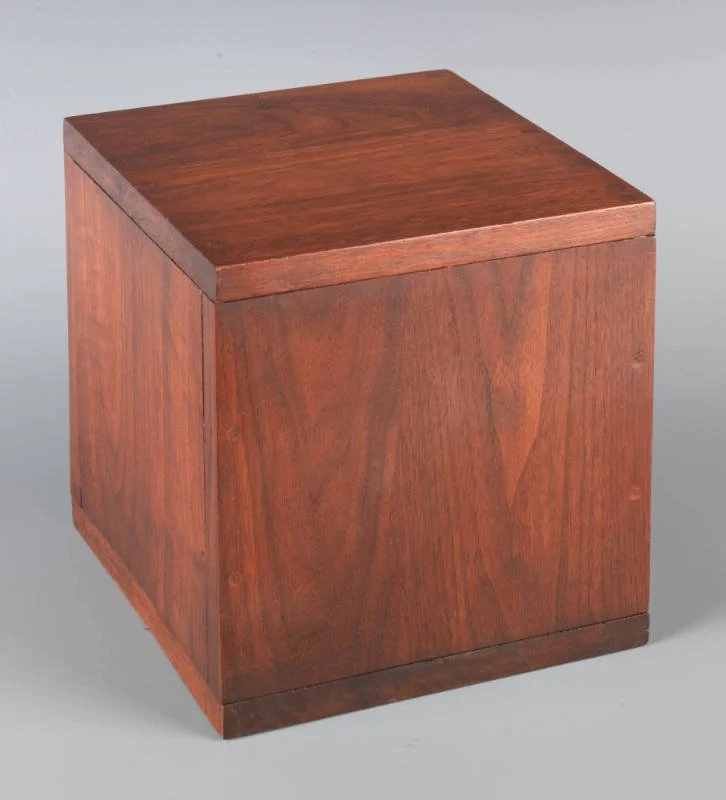
Fig. 2 - Robert Morris, Box with the Sound of Its Own Making, 1961
Box with the Sound of Its Own Making (1961) is a sealed wooden box in the shape of a cube made by the artist. The box is hollowed inside and contained tape recording of the sounds produced during its own making concealed inside the box. The recording of the noise of woodcutting, hammering and sanding made the viewer actively aware of the laborious process and effort that went into the making of the wooden box. The size of the box, around 9 inches at each side, also says something as it is a size that suggest a single person has made the box by hand, a box of gigantic scale would be hinting maybe several people or even machines might have been involved in the process.
Morris had taken a role of a craftsperson in this work, but the statement he made with this work was the opposite of traditional craft. Morris did not bother with mastering a woodworker’s skill to make the box masterfully as the edges of the wood were rough. He also consciously chose to create the most unadorned and plain cube form. The style of the box was minimalistic, and although the box was made by hand, advanced skill was not required to make a plain wooden box; almost anyone could make such a wooden box under simple instructions. The statement made by Morris was subversion to craft by choosing to do a woodmaker’s work but only doing the most ordinary basics, or perhaps Morris worked as a new type of craftsman who only focused on the simplest of forms. In this work we see an example of Robert’s deskilling, a deskilled craftsman who intentionally made the most simple wooden box, however the intangible skill which he reskilled himself, he explored notions of minimalism and made the viewer think of artistic labour in a different way. By the subverting traditional craft techniques in the minimal as possible and denying the romantic and mystifying qualities in the creation of an art object, Morris made a statement by treating the artistic process as mundane, time consuming and tedious work.
Process and Craft
‘Craft only exists in motion. It is a way of doing things, not a classification of objects, institutions, or people.’ (Adamson, 2007)
Process Art, an art movement that emerged during the 1960s, puts the focus of art-making on the process and not the result of the work. Things were made without too much consideration of the final art object produced, rather focusing on the process that created or left its mark on the material, the form of the material decided by the process.
‘To roll, to crease, to fold, to store, to bend, to shorten, to twist, to dapple, to crumble, to shave, to tear, to chip, to split, to cut, to sever, to drop, to remove, to simplify, to differ, to disarrange, to open, to mix, to splash, to knot, to spill, to droop, to flow, to curve, to lift, to inlay, to impress, to fire, to flood, to smear, to rotate, to swirl, to support, to hook, to suspend, to spread, to hang, to collect, of tension, of gravity, of entropy, of nature, of grouping, of layering, of felting, to grasp, to tighten, to bundle, to heap, to gather, to scatter, to arrange, to repair, to discard, to pair, to distribute, to surfeit, to compliment, to enclose, to surround, to encircle, to hole, to cover, to wrap, to dig, to tie, to bind, to weave, to join, to match, to laminate, to bond, to hinge, to mark, to expand, to dilute, to light, to modulate, to distil, of waves, of electromagnetic, of inertia, of ionization, of polarization, of refraction, of tides, of reflection, of equilibrium, of symmetry, of friction, to stretch, to bounce, to erase, to spray, to systemize, to refer, to force, of mapping, of location, of context, of time of carbonization, to continue.’ (Serra, 1967-1968)
Since productivism, constructivism and Duchamp, the labour of the artist is no longer confined to the studio; paths have been opened for artists to the ways of laboring in various technical and non-artistic forms, such as Serra’s experimentation with vulcanized rubber, molten and solid lead, materials that are not used in traditional sculpture-making. In Serra’s infamous “Verb List” in the early 1970s, he wrote down a list of verbs that contains basic actions that he would execute onto materials such as molten lead and rubber pieces, transforming them into another form through those processes. Some of the verbs were “to roll”, “to lift” and “to splash”. “To roll” was a piece of thin lead rolled up, “To lift” was a piece of rectangular rubber lifted mid-point on its edge, forming a mini mountain that would stand on itself. Craft in its rawest form, is a process. The physical action of manipulating materials requires an understanding of the medium by the craftsman, knowledge of the medium is essential to craft, knowledge of a medium can be gained through experimentation. In ‘Verb List’, Richard Serra sets out to explore the effects these processes would have, and if the medium was left to respond to forces such as gravity or a process that requires time such as “of inertia”, “of time of carbonisation”, “to continue”, the material was left to the forces of nature to craft itself.
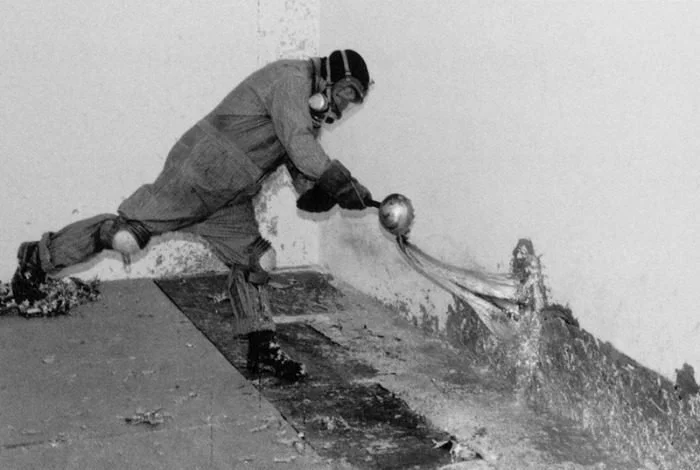
Fig. 3 - Photograph of Richard Serra throwing lead, 1969
Process Art adds to John Robert’s argument of deskilling as in the 1960s, as a huge amount of experimental process art emerged. Early works from Serra had shown demonstrations of deskilling and artists separating themselves from traditional craft and learned skill as much as possible through engaging in processes that required little to no skill. The reskilling part is the move to conception and presentation. As the conceptual artist Ian Burn has pointed out: Skills are not merely manual dexterity but forms of knowledge. As Roberts’ take on the argument of deskilling and reskilling was more optimistic, Burn’s argument lean onto the pessimistic side. He said ‘Deskilling in art as a genre didn’t just devalue traditional skills; it devalued disciplined training itself. What had been a democratizing impulse was inadvertently turned into a dumbing down. The acquisition of particular skills implies an access to a body of accumulated knowledge. Thus deskilling means a rupture within a historical body of knowledge—in other words, a dehistoricization of the practice of art.’ We could be walking on thin ice with deskilling in art that could lead into a misunderstanding that there is no value in traditional artistic labour; that being skilled as an artist is pointless and there is nothing to learn from the Old Masters and looking at older art. Practices of art has always relied on the passing skills of a certain traditional artistic medium from a tutor to their students. After deskilling, suddenly there is nothing to pass onto as ideas and thinking are highly individualistic could not be passed down. This could be a rupture in craft that affects all contemporary art practices.
The Everyday Craftsman and the Artist as Amateur
With the rise of the DIY Do-It-Yourself culture and indie craft knowledge made more available through websites like Pinterest, a kind of online scrapbooking site that gives the user the ability to collect ideas posted by other users, information and inspiration for crafts and making, starting craft as a hobby never been easier. Online shopping websites that promotes homemade crafts such as Etsy, a site which allows users to set up an account and sell their handmade crafts to people all over the world, provide an organised online platform catering to home crafters and artisans to sell unique pieces. Self-organised knitting groups allow people with a mutual interest in the craft to meet and exchange, which adds to the social aspect of knitting. In Proposition Two of Bryan-Wilsons article ‘Why is Craft Contemporary?’ discusses the contemporary artists of today and how their position stands craft in the contemporary. While homemade crafts are rapidly expanding in the realm of the Internet, craft in the context of fine art bears slightly different connotations to that of the DIY hand-made as there is a boundary between the artist who is trained and the amateur, who is self-learnt.
It is very important that amateurs and the self-learned works outside the professional field. Untainted by an institutional education, amateurs and hobbyists are unaware or, have no access to professional knowledge. They have to hone their skills and craftsmanship through repeated trial and error, discovery and self-learning. Some artists, touched and inspired by the hobbyist’s passion to create, the rawness of their technique and their slightly obscure self-learnt ways, would intentionally deskilled themselves from their trained modes of art making. Amateurs may spend years, decades, or even an entire lifetime making art strictly for personal pleasure. They do not desire to make a name for themselves, sell their artwork, or try to support themselves with their artwork. Amateurs create what brings them joy, whenever they feel like it. They may take art lessons, but they have no commitment to professionally developing their skills. They simply want to create, without turning it into work.
It is not uncommon for artists to venture out of their main medium or practice and explore other practices as an outsider, for example Florian Klette’s Jockey dansen (2009) where he attempts to learn ballet in the context of an exhibition. Perhaps a spark is present in the amateur spirit, a pure passion to do or create what they set their mind to without too much of a care of the audience, as a hobby, that the artist finds intriguing. Perhaps it is the freedom that comes with being an amateur that is liberating to the artist, that they can forget about being masterful at their particular field. The flaw of the masterfully skilled artisan is that they know their subject too well. It is unthinkable that how being so incredibly skilled and good could be a flaw, being creative handicap. Andy Warhol once said, “Every professional performer always does the same thing at exactly the same moment in every show they do, what I like are things that are different every time. That’s why I like amateurs, you can never tell what they’ll do next.” Amateur art that is in a different realm, art that might never been seen by anyone but the creator. Art that is very bad. Amateur art also questions the nature of art and artistic practices. “Can anyone make art?”, “Is everyone artistic?” and whether art is nature or nurture. We can all argue that we are all amateurs, or all started as one. From the first time we picked up a paintbrush, squeezed paint out of a tube, or bought your first block of wood. Being an amateur is the first step to becoming a craftsman. As Ralph Waldo Emerson said, every artist was first an amateur.
Grayson Perry is an artist who is known for his ceramic work, vessels and large embroidery work. He chooses to call himself a ‘trendy potter’ and proclaims to use pottery as a gimmick. His ceramics works often addresses the British-ness of everyday life in the UK, his vases chronicle and critique recent sociological issues with a sharp sense of humour, often about British culture, taste and the British class system. His stylistic illustrations almost imprint all of his vessels and tapestries designs, which is the most distinctive feature of his work.
The illustrations themselves are often child-like and not very refined, causing a dissonance between the conventional forms of his vessels and the depictions that adorn them.
Working as a potter, one of the oldest craft practices in human history, Perry has great respect to ceramics, the history and the roots of where it came from. The Tomb of the Unknown Craftsman is an exhibition at the British Museum curated by Grayson Perry in 2012. Celebrating all the unknown excellent craftsmen that had made all the beautiful artifacts in the British Museum. Perry spent two years in the museum’s archives browsing through 8 million objects, picking and selecting, he choses them based on the aesthetics and aura they emit, objects that resonated to his own artistic preoccupations and how they relate to his own work and thought process. The results are a fascination exhibition of objects from ancient history to the modern day that no historian could have arranged and put together. In the publication released for the exhibition, he wrote. ‘Do not look too hard for meaning here. I am not a historian, I am an artist. That is all you need to know.’ (Perry, 2011) He sees the artifacts not as an historian but through the lens of an artist and relating them to his own unique identity as an artist. This is why Perry being an amateur is important in this scenario of curating an exhibition of historical artifacts. Professional historical knowledge would have hindered him from picking objects purely based on his own his own experiences and his view of the world, everything that makes Perry, Perry. He also made ceramic vases and embroidery work that complimented the exhibition; bringing viewers into his own take on world history and his imaginary civilisation.
Perry is an example of both working within a traditional craft – ceramics with a twist mixed with inspiration and being an amateur historian. He takes in visual and historical influences from his own cultural background and cultures entirely different and with his own understanding of these cultures not as a historian but as an artist, in this case he functions as an amateur historian, through the artist’s lens he is absorbing these cultures through his own understanding and incorporating this artist perspective knowledge into his own fantasy universe which he turns into ceramic designs and patterns. He blends craft beautifully into the realm of fine art while retaining the seriousness in his work without being suffocating. His works bearing the quality of historical artifacts despite being very contemporary is comes from his dedication to his craft in ceramics and embroidery and motifs of traditional crafts and the quality of being shockingly modern with engravings and imagery of very modern issues like Brexit on his vases and embroideries which seem to evaluate his pots to the status of art.
The vessel served as a canvas for his politically, socially and sexually charged illustrations and diagrams etched into the surface, photographic transfers glossing the textural exterior of these traditional clay containers that provokes much contemplation and debate. What exactly is the role of ceramics in Grayson Perry’s work then? Looking at Glenn Adamson’s essay Craft as Supplemental, ‘Craft functions as a transparent set of procedures, certainly to be deployed but not to be present in the content of the finished work. […] Craft always subjugates itself in the interest of the overall work’ (Adamson, 2007) Ceramics and embroidery seem to provide a transparent historical backbone which craft is immediately tied to, and as we look at Perry’s work we immediately make a link to history, whether we are conscious about it or not, as the image of a China vase or century old embroidery is ingrained into our brains.
Craft in Feminist Art
There is a hierarchy in the arts: decorative art at the bottom, and the human form at the top. Because we are men. – Le Corbusier and Amédée Ozenfant
Embroidery, knitting, quilting and other forms of decorative and textile techniques has long been considered as women’s craft, and whether these practices can be considered as “art” has been debated for many years. Due to the long history of restraining and suppressing women to the household, textile crafts are often thought of as a feminine-appropriate pastime for women. Some feminist artists saw this as an opportunity to subvert traditional connotations of textile work as ‘decorative’. Feminist artists used craft as the medium to bring forward social change. As Lucy Lippard wrote in her essay Something from Nothing, “feminist artists have become far more conscious of women’s traditional arts than most artists. And feminist artists are also politically aware of the need to broaden their audience, or the need to broaden the kind of social experience fine art reflects.”(Lippard 1978)
Hannah Hill started experimenting with embroidery as a medium in her art school education. As she looked deeper into embroidery in art history, she grew aware of the fact that embroidery art by women was mostly left out in art history and was not taken as seriously as other well recognised mediums such as painting and sculpture. Hill combines feminism and embroidery with the modern day ‘meme’ culture where she weaves feminist Internet memes onto fabric to address contemporary social issues, such as women empowerment and body positivity.
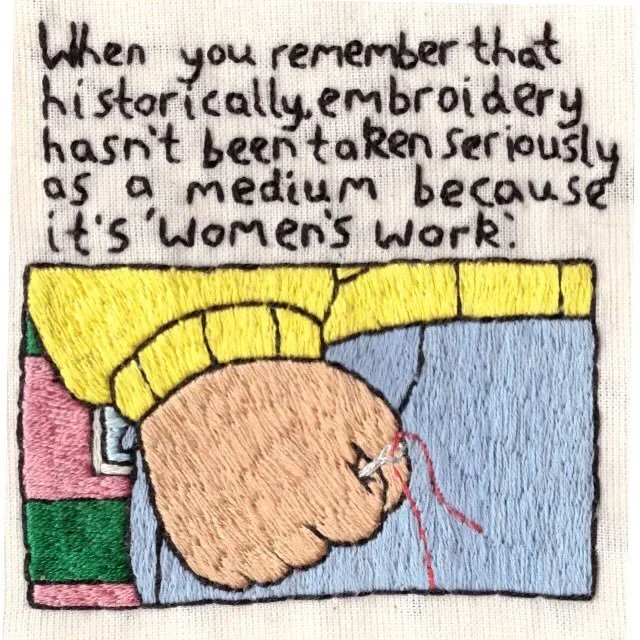
Fig. 4 Hannah Hill, When you remember that historically, embroidery hasn’t been taken seriously as a medium because it’s ‘women’s work’, 2018
Internet memes are a new form of fast circulating images that contains an image and a simple caption. Internet memes can be casually created by anyone, then reproduced and re-circulated by social media users. An Internet meme could be anything from an image to an email or video file; however, the most common meme is an image of a person or animal with a funny or witty caption. The embroidered ‘meme’ that Hill made in the above is the familiar format of Internet memes yet produced with real fabric thread instead of an often borrowed online images. While meme creating sites are widely available to anyone, anyone can create a meme with a funny idea even with little or none computer graphics knowledge, Hill’s “memes” require embroidering skills, practice, time and a lot of effort to create.
In this work, Hill addresses the issue of embroidery being not as respected as other mediums of the main art history because of its connection to being considered a women’s craft historically. While embroidery works usually depict their subjects in a realistic manner, Hill went for an illustrative style, almost comic-like. The comical image of a hand in a fist grabbing a needle shows the anger and frustration of the artist. Like general viral Internet memes, it was not meant to be taken seriously, usually for a quick laugh at the creator’s creative puns. However Hill is addressing a serious issue of women’s rights and women’s labour not being taken seriously, with a meme created by a woman artist with her labour in the form of embroidery - “women’s work”, quoting from Hill’s caption. Hill’s sewn image with a cartoon hand holding a fist holding a needle is both comedic and serious. This works allows the viewer to have the general entertainment of what looking at Internet memes is like while it leaves space for thought and contemplation due to the serious tone and controversy of the addressed issues in the work.
After posting a picture of her work on the social platform Twitter, her post was shared by thousands of people and circulated on multiple social media platforms. Hill changed the context where embroidery art is seen, from the gallery wall to an image of a meme circulating on social media. Hill uses the image to showcase her embroidery works on social media, reaching an audience who would not normally visit art galleries or engage in the arts.
Citing from Julia Bryan-Wilson’s What is Contemporary about Craft, she has argued that “craft is contemporary because it has embraced the digital, because it has gone online, because of the explosion of craft blogs, social media sites, and intimate interfaces with the internet.” Hill’s co-operation with embroidery and social media proves that young artists and crafts are moving into the realm of the internet to hopefully share their work to a larger audience. Hill’s embroidery pieces, which are tackling issues of feminism, body positivity and women empowerment are huge topics and talking points on the Internet. As more feminist movements are taking place on Internet spaces, such as the #metoo movement and the gender pay gap awareness on Twitter, it makes sense for Hill to bring issues about women’s craft to Internet spaces for discussion. The Internet meme quality in Hills works combines feminist art, embroidery and the Internet social media blending into one another. At the same time the stark contrast of fast paced communication and speed with Internet culture and memes and embroidery is a strangely refreshing combination of mediums, one very long rooted in history and one very current and in the now. Hill’s creations made embroidery very current and relatable in the age of fast paced imagery and Internet communication. Hannah Hill’s uses craft as a subversive and a means to being forward social change, against gender roles and stereotypes.
Craft in Contemporary Art
“The making begets the knowing” – Ulrich Lehmann
The beauty of contemporary art lies in that artists can freely choose to associate and work with a traditional craft, or not to through deskilling, working with Readymades, exploring in process, in choosing, in rearrangement to change value and perception. By choosing to work with craft in contemporary art, it would have its own associations and meaning with working with the hand, authorship of the artist’s work, identity, manual labour, skill, an attachment to materials and procedures, and devotion to making a unique art object. Working in craft can also be a form of resistance and a sign rejection, a resistive force against the fast-consuming capitalist society that we live in. By engaging a craft we engage in the slowness of process. Peter Korn has pointed out in his book Why We Make Things and Why It Matters, there is a direct relation between individuals and the society through craft, and how one can be subversive through craftwork. “Prior to the industrial revolution, virtually every object had been produced by hand, subsequently to it, making things by hand became a potentially subversive act, something one did in opposition to prevailing social norms”.
John Roberts had discussed in The Intangibilities of Form that craft would re- enter contemporary art if society has become increasingly or totally deskilled. Craft and art objects made by the artist would eventually re-enter the art world as the new artistic movement if that were to happen. Artists would re-engage with traditional artistic skills in order to go against the general deskilled autonomous social technique, as art always attempt to challenge perception in mainstream society. We have already seen a bit of that happening in contemporary art now as artists move from the minimalistic movement, from abstract expressionism back to something more tangible as those fields have dominated the art world for most of the 20th century. The return of craft in contemporary art, either as a medium or as a supplement, after the trend for disregarding traditional artistic skills of avant-garde art after World War II, calls for artists in the current generation to look back into history and take inspiration from craft.
Conclusion
Craft is ever-changing adapting to social changes, cultures and fine art. Today the boundary between art and craft is ever present, with craft being considered inferior to art. Craft is something that can be taught, skills that are tangible, whereas art is highly tied to the visions of the individual and cannot be taught. Craft is hidden and buried by layers and layers of interpretation, connotations and history that no one could pin point what craft exactly is. Nonetheless craft creeps into and crosses the boundary and overlaps with contemporary art. Craft is explored by many artists today, by the above artists to name a few, and craft is an inseparable part in contemporary art. Firstly Duchamp changed the value of artistic labour by introducing the Readymade, Robert Morris deromanticised artistic labour and experimented with deskilling, Perry taped into the sensitivity of British life, and Hannah Hill worked with embroidery, a traditionally feminine craft to address women’s labour and other feminist issues.
Contemporary artists look into the value of labour and the social aspect of craft in a post-Readymades art world. Craft is incredibly versatile and has many complex definitions. Craft is both familiar and new. Almost anyone can engage in craft, amateurs and professionals alike. Everyone sees and approaches craft for different reasons. For artisans, they take pride in their practice and their craft is their way of making a living, while others engage with craft in a more casual manner, whether for a good pastime, the social bonding crafting practices bring or making as a therapeutic experience. Craft is fundamentally a process of making. In contemporary art, artists explore the value of labour, uses craft as a supplement to their subject of interest, and some simply want to engage in mastering a traditional artistic skill.
Craft transverse the financial, cultural, historical; craft adaptive, it response to social changes and is evolving everyday with the development of new materials, techniques and technology. There are a lot of reasons why artists, artisans and amateurs still engage in craft today. Making allow us to gain an intrinsic understanding of how material works. Making satisfies our desire to create, and gives the satisfaction of doing something really well. Perhaps what brings artists and artisans to common ground is the desire to create, to bring the vision in our minds to the world. Ending with Bryan-Wilson’s last propositions in What is Contemporary about Craft, “With all its complexities, with all its different registers of meaning across history, across class, across gender, across institutions, craft is all of these things, some of these things, none of these things”
Bibliography
Books:
Harrod, T. (2018). Craft. 1st ed. London: Whitechapel Art Gallery, p.35.
Hung, S. and Magliaro, J. (2007). By hand. 1st ed. New York: Princeton Architectural Press, pp.3-9.
Perry, G. (2011). The tomb of the unknown craftsman. London: British Museum Press, pp.1-12.
Roberts, J. (2007). The Intangibilities of Form: Skill and Deskilling in Art after the Readymade. Edition. Verso.
Sennett, R. (2009). The craftsman. 2nd ed. London: Penguin, pp.35-56.
Articles:
Molesworth, H., Alexander, M. and Bryan-Wilson, J. (2003). Work ethic. University Park: Pennsylvania State University Press.
Molesworth, H, Work Avoidance: The everyday life of Marcel Duchamp's readymades. (1998) Art Journal, 57,4 p.50-62
Roberts, J, 2010. At After Deskilling. Historical Materialism, Volume 18, issue 2, 77-96
Bryan-Wilson, J. (2013). Eleven Propositions in Response to the Question: “What Is Contemporary about Craft?”. The Journal of Modern Craft, 6(1), pp.7-10.
Images
Fig. 1
Fountain. (2019). [image] Available at: https://www.tate.org.uk/art/artworks/duchamp-fountain-t07573 [Accessed 11 Nov. 2018].
Fig. 2
The Met (2019). Box with the Sound of Its Own Making. [image] Available at: https://www.metmuseum.org/art/collection/search/689665 [Accessed 10 Nov. 2018].
Fig. 3
Throwing Lead. (2019). [image] Available at: https://theartstack.com/artist/richard-serra/throwing-lead-1?product_referrer_user_id=429616921 [Accessed 7 Dec. 2018].
Fig. 4
Embroidery created by contemporary UK textile artist Hannah Hill aka Hanecdote #womensart. (2019). [image] Available at: https://twitter.com/womensart1/status/938676937844813824 [Accessed 2 Jan. 2019].
Videos
Vam.ac.uk. (2019). Video: Grayson Perry discusses craft and art - Victoria and Albert Museum. [online] Available at: http://www.vam.ac.uk/content/videos/g/video-grayson-perry-discusses-craft-and-art/ [Accessed 8 Jan. 2019].